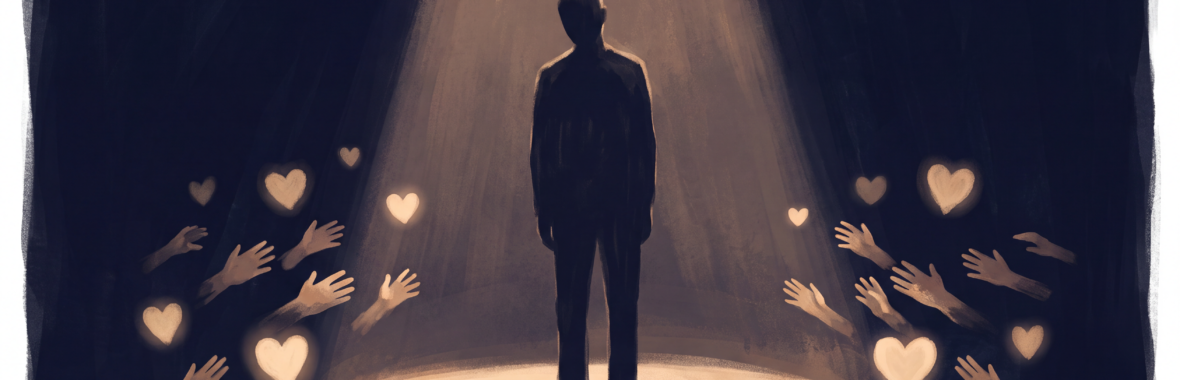
K-pop is a global phenomenon built on passion, connection, and community. This article is not a criticism of fans or the culture itself, but an exploration of what happens when a deep emotional connection begins to blur the line between admiration and ownership.
K-pop has created something that few entertainment industries have managed to build on such a massive scale: a relationship between artists and fans that feels deeply personal.
For millions of people around the world, K-pop is not just music.
It is community.
It is comfort.
It is a connection to artists who seem to share their lives, struggles, dreams, and personalities with their audience.
But this unique relationship also creates a difficult question:
What happens when emotional connection becomes a sense of ownership?
When support turns into control?
When admiration turns into the belief that an artist belongs to the people who love them?
The answer is complicated — because the same passion that makes K-pop so powerful can also create some of its biggest challenges.
The unique relationship between K-pop idols and fans
To understand the extreme side of K-pop fandom, we first have to understand why the connection feels so strong.
Unlike traditional music industries where fans mainly interact with an artist through songs, concerts, and interviews, K-pop has built an entire ecosystem around closeness.
Fans do not only see performances.
They see:
- Behind-the-scenes content.
- Reality shows.
- Live broadcasts.
- Personal messages.
- Daily updates.
- Stories about the artists’ struggles and personalities.
Many fans follow idols from their trainee days, before they become famous.
They vote for them in competitions.
They support their first releases.
They watch them grow.
This creates a powerful emotional experience.
The feeling is no longer only:
“I enjoy this artist’s music.”
It becomes:
“I feel like I know this person.”
And that feeling is very human.
Humans naturally create emotional connections with people they see frequently, even when the relationship is not mutual.
Psychologists describe this as a parasocial relationship — a one-sided emotional bond where a person feels connected to a public figure.
These relationships are not automatically unhealthy.
They can provide inspiration, comfort, and a sense of belonging.
The problem begins when emotional attachment changes into entitlement.
When admiration becomes ownership
There is an important difference between saying:
“I love this artist.”
and:
“I have the right to decide who this artist should be.”
The first is appreciation.
The second is ownership.
This is where some parts of fan culture become complicated.
Because K-pop often sells not only music, but also an image.
Idols are frequently presented as:
- Always kind.
- Always available.
- Emotionally connected to fans.
- Almost impossible to criticize.
The industry creates a fantasy of closeness.
But behind that image is a real person.
Someone with private feelings.
Private relationships.
Private mistakes.
The conflict appears when fans begin protecting the fantasy more than the person behind it.
The relationship controversy: When private life becomes public property
One of the clearest examples is the way dating scandals are treated in parts of the K-pop industry.
For many fans, discovering that an idol is dating can feel like a personal betrayal.
But why?
Because the emotional connection created by the industry can sometimes blur the line between imagination and reality.
When Love Requires an Apology
A famous example is the situation involving Karina, who faced intense criticism after news of her relationship became public.
When news broke that Karina, the leader of the girl group aespa, was dating actor Lee Jae-wook, the reaction from part of the fandom was immediate. Some fans organized protests, threatened to boycott the group, and demanded an apology. Within days, Karina released a handwritten letter apologizing to fans—not for harming anyone, but for disappointing them.
The reaction from some fans became so severe that she issued a public apology.
The controversy raised a difficult question:
Why should someone apologize for experiencing a normal human emotion — falling in love?
Privacy Becomes Public Property
Another example is Seunghan, whose private photos were leaked online.
Before officially returning to RIIZE, private photos and videos of member Seunghan—including images of him with a girlfriend and smoking—were leaked online. Although none of the material involved criminal behavior, the backlash from some fans was severe. Funeral wreaths were even sent to SM Entertainment’s headquarters, symbolically mourning his career and demanding his removal from the group. Eventually, he stepped away from RIIZE, turning a violation of his privacy into a career-defining controversy.
The larger issue is not whether fans are allowed to feel disappointed.
They are.
Fans are human.
The issue is what happens when disappointment becomes punishment.
When supporting an artist turns into believing that the artist must sacrifice normal human experiences to maintain an image.
The strange contradiction: Protecting idols while hurting them
One of the most interesting aspects of extreme fandom is the contradiction at its center.
Fans often love idols so deeply that they want to protect them.
But sometimes, that protection creates another form of harm.
When an artist faces criticism, some fans immediately go into defense mode.
They attack anyone who questions the situation.
They dismiss uncomfortable conversations.
They defend companies or decisions without knowing the full story.
Protecting the Industry Instead of the Artist
One of the most widely discussed examples involved NewJeans, one of South Korea’s biggest girl groups. In 2024, the members became involved in a highly public dispute with their management companies, HYBE and ADOR, over issues including trust, workplace treatment, and the group’s future. As the conflict unfolded, public opinion became deeply divided. While many fans expressed concern for the members, others accused the group of being ungrateful or disloyal for speaking out against the company that had launched their careers. The case highlighted how, in some situations, loyalty to a company or an idol’s public image can overshadow concern for the people at the center of the conflict.
The details of individual disputes can be complicated.
But the broader pattern is important:
Sometimes people become so invested in protecting an image that they struggle to accept anything that challenges it.
The darker side of the industry: When young people become products
The conversation about K-pop cannot only focus on fans.
The industry itself plays a major role.
K-pop is built on intense competition.
Trainees often begin preparing from a very young age.
They spend years training in singing, dancing, appearance, and public behavior.
This raises difficult questions:
How young is too young to enter such a demanding industry?
How much pressure should children and teenagers carry?
And what happens when the desire to create the perfect image becomes more important than protecting the person behind it?
Cases involving young performers, such as the controversy surrounding the audition program Under15, sparked discussions about how children are presented in entertainment and where the line should be drawn between performance and exploitation.
When Children Become Products
Controversy emerged around the audition program Under15, which featured contestants as young as eight years old. Critics argued that the styling, choreography, and presentation placed children into situations that felt far more mature than their age. While many people condemned the show, others defended it as simply reflecting the realities of the entertainment industry. The debate raised uncomfortable questions about where artistic performance ends and exploitation begins.
The responsibility does not belong only to fans.
Companies, producers, and audiences all play a role in deciding what kind of industry they support.
So where is the healthy boundary?
Being a passionate fan is not a problem.
In fact, fandom can be a beautiful thing.
Fans create communities.
They support artists.
They celebrate creativity.
They create friendships across cultures.
The problem begins when love requires control.
A healthy fan says:
“I love this artist and I want them to be happy.”
An unhealthy attachment says:
“I love this artist, therefore they must behave according to my expectations.”
The difference is subtle, but it changes everything.
Behind every idol is a person
K-pop’s greatest strength is the emotional connection it creates.
But that same connection must be handled carefully.
Because behind every perfect performance, every carefully created image, and every stage smile, there is a human being.
Someone who wants to be respected.
Someone who makes mistakes.
Someone who deserves a private life.
The goal should not be to remove the passion from fandom.
Passion is what makes music meaningful.
The goal is to remember that admiration and respect should exist together.
Because the moment we stop seeing artists as people and start seeing them as products, everyone loses:
The artists.
The fans.
And the culture itself.
This is not an attempt to judge a culture, but an invitation to understand the human behavior behind it.
K-pop didn’t invent obsessive fandom—it created one of the clearest modern examples of how emotional connection, commercial design, and digital culture can blur the line between admiration and ownership.

Leave a Reply